
Brand Differentiation: Why being different is the key to being chosen
10 March 2026 · 13 min read

Chelcie Plowright
Managing Director & Brand Strategist
Brand Differentiation: Why being different is the key to being chosen
10 March 2026 · 13 min read
Customers are flooded with choices in this day and age and what we’ve noticed is that strong brands are rarely the ones saying the most - they’re the ones saying something clear, relevant and meaningfully different.
That’s the role of brand differentiation.
Brand differentiation is the strategic foundation that helps define what sets your business apart, why that difference matters, and how to express it in a way your audience quickly understands.
It sits at the heart of your brand strategy, shaping everything from your positioning and messaging to your offer, customer experience and your tone of voice. Before a brand can communicate well, it needs clarity on what makes it different from the competition.
And yet, this is one of the areas businesses most often skip or rush.
Many brands go straight to completely renewing their website or building a visual identity without first doing the deeper work of defining what they actually want to be known for.
The result is usually messaging that feels broad, generic, or confusing. Phrases like tailored solutions, trusted experts, or quality service may sound safe, but they don’t give customers a compelling reason to choose your business over another.
That’s why so many brands struggle to cut through. Not because they’re not good at what they do, but because their difference hasn’t been clearly articulated in their brand messaging.
The strongest brands understand that differentiation is not about being louder or more dramatic. It’s about being more specific, more relevant, and more intentional in how you position your value.
We’ve done our research and found some of the best examples from our own shores - Australian brands like Canva, Who Gives A Crap, Thankyou and Koala. These businesses that have built strong recognition not simply by looking good, but by owning a clear point of difference in the market.
So what is brand differentiation exactly?
Brand differentiation is the process of identifying and expressing what sets your business apart from competitors in a meaningful way.
That difference might come from:
- your offer
- your niche or specialisation
- your customer experience
- your process
- your story
- your values
- your personality
- your business model
- your point of view
The key is that your difference must be relevant. It has to matter to the people you want to attract- your customers and your target audience.
A lot of brands think differentiation means being louder, more creative, or visually unique. But in reality, the strongest differentiation is often much simpler than that: it is the ability to clearly answer, why should someone choose you over the alternative?
If your brand cannot answer that quickly and convincingly, your messaging will almost always feel vague.
If you are working through this, it usually starts with clearer brand strategy and a stronger brand messaging framework.
Why brand differentiation matters
When there is no clear differentiation, brands tend to default to the same tired claims:
- quality service
- money back guarantee
- tailored solutions
- trusted experts
- innovative thinking
- customer-first approach
The problem is, most competitors are saying the same thing.
So while those phrases may not be wrong, they are rarely persuasive or unique on their own. They do not create a sharp position in the market, and they do not give your audience anything tangible to hold onto.
That is why brand differentiation matters. It helps your business:
- stand out in a crowded category
- attract better-fit customers
- reduce price-based comparison
- strengthen recall
- build trust faster
- create more effective brand messaging
- make marketing and sales communication much more consistent
In short: if your brand is hard to distinguish, it becomes easier to ignore.
We see this often with businesses that come to us for brand messaging support - the issue usually is not that they have nothing to say, it is that their difference has not been clearly defined yet.
Why differentiation matters for brand messaging
Strong brand messaging does not start with clever copy. It starts with strategic clarity.
If you have not clearly defined what makes your brand different, your messaging will usually end up broad, generic, or interchangeable.
That is why we see so many businesses struggle with their brand messaging, website copy, service descriptions, elevator pitches, or campaigns/advertising. The issue often is not the writing itself - it is that the positioning underneath has not been clearly defined.
Once you know what sets your brand apart, your messaging becomes easier to shape.
You can speak more clearly about:
- what you do
- who it is for
- why it matters
- what makes your approach different
- why someone should trust you
That is what turns a brand message from fine into compelling.
If you want to go deeper on this, we have also written about what a brand message is and why it matters and why clarity beats clever.
4 Australian Brands Getting Differentiation Right
One of the easiest ways to understand strong brand differentiation is to look at brands that have made their difference obvious.
These Australian companies are not just successful because they have good marketing. They are strong examples because they have built a clear, recognisable position in the market - and their messaging reflects it.
1. Canva: simplifying a complex category

Canva is one of Australia’s clearest examples of brand differentiation done really well.
Founded in Sydney, Canva has grown into a global platform, with the company reporting 260 million monthly users in 2025.
But the real lesson is not just its scale. It is how clearly Canva differentiated itself from the beginning.
Before Canva, design software was often seen as complicated, specialist, and built primarily for trained designers. Canva reframed the category by making design feel simple, accessible, and useful for everyone.
Its brand differentiation is built around:
- ease of use
- accessibility for non-designers
- speed and convenience
- empowering anyone to create
That is what makes Canva’s brand message so strong. It does not lead with complexity or technical capability. It leads with simplicity and possibility.
What Canva teaches us: Sometimes the strongest differentiation comes from making a category easier, more inclusive, and less intimidating.
2. Who Gives A Crap: making a commodity feel memorable
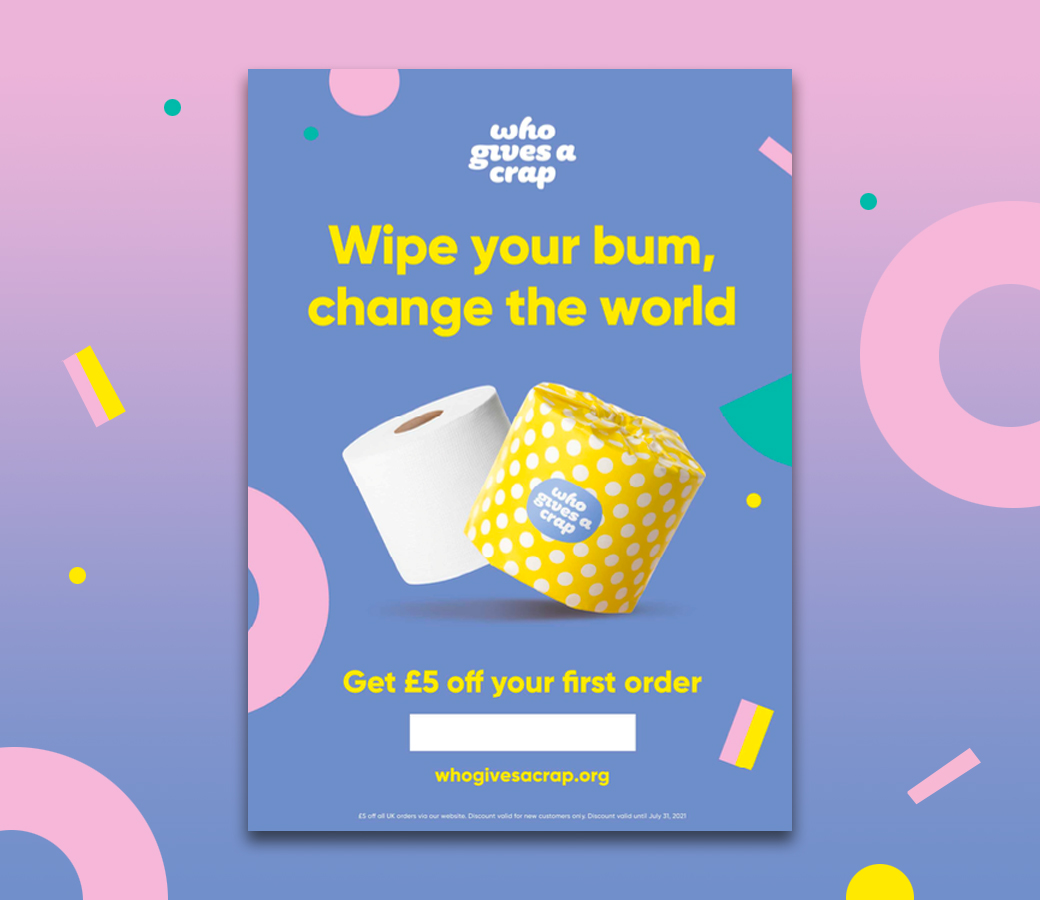
Toilet paper is about as everyday as it gets - which is exactly why Who Gives A Crap stands out so effectively.
The Australian brand has built strong recognition in a category most people would normally treat as purely functional. It states that 50 percent of profits are donated to help improve access to clean water and toilets, and says it has raised over $20 million to date.
That is a powerful point of difference in itself. But it does not stop there.
The brand has also differentiated through:
- a bold, unforgettable name
- a humorous, irreverent tone of voice
- sustainability messaging
- a stronger product and packaging experience
- a purpose-led story in a low-interest category
This is what makes the brand memorable. It took a commodity product and wrapped it in personality, purpose, and a much more engaging customer experience.
What Who Gives A Crap teaches us: You do not need to invent a new category to stand out. You can create strong differentiation by reframing an ordinary product in a more distinctive and meaningful way.
3. Thankyou: building the brand around mission

Thankyou is another standout Australian example because its differentiation is deeply tied to its business model. Thankyou is an Australian social enterprise that sells everyday products including personal care, cleaning and baby essentials.
What makes the brand distinctive is that it doesn’t simply market a purpose-led image — its mission is built into how the business operates. Thankyou says it exists to help create a world where no one lives in extreme poverty, and that it is owned 100% by its charitable trust. It also states that it gives every cent left after costs toward that mission.
That makes its positioning feel far more credible than brands that only layer purpose on top of the product.
Its differentiation comes from:
- a mission-first business model
- a clear social-enterprise structure
- emotionally resonant storytelling
- giving customers a values-based reason to choose the brand
Rather than competing only on product, Thankyou positions itself around participation in a bigger idea. That creates a deeper level of connection than function alone.
What Thankyou teaches us:
A mission can be a powerful differentiator — but only when it’s real, credible, and built into the business itself.
Koala: using customer experience, personality and Australian identity as the differentiator

Koala is a strong example of brand differentiation because it doesn’t just sell furniture and mattresses — it sells a brand experience that feels easy, playful and unmistakably its own. The Australian furniture and mattress brand positions itself around convenience, with features such as fast delivery, tool-free assembly, and a 120-night trial. Koala also highlights its sustainability credentials, including certified B Corporation status and membership in 1% for the Planet.
But what also makes Koala stand out is the way it builds personality into the brand itself.
Even the name “Koala” helps create an immediate sense of warmth, familiarity and Australian character. Its messaging often uses playful, cheeky language that feels less like traditional furniture retail and more like a brand with a point of view. Phrases like “Settle in for a serious squish” and product copy such as “marshmallowy, booty-approved, squishable sit” make the experience feel memorable, human and a little unexpected in a category that can otherwise be quite functional.
Koala has also leaned into this more playful, proudly Australian brand world through its collaboration with Bluey, the hugely recognisable Australian children’s franchise. On its official site, Koala describes this as “our most playful collaboration ever” and offers a Koala x Bluey range, helping extend the brand into family life in a way that feels both commercially smart and culturally relevant.
That combination of convenience, humour and cultural familiarity gives Koala a stronger emotional identity than many brands in its category. In my view, that’s part of why the brand feels inherently Australian — not just because it’s based here, but because it expresses a relaxed, confident and playful tone that feels locally recognisable.
Its differentiation is built around:
- direct-to-consumer convenience
- easy setup
- trial-based confidence
- cheeky, memorable messaging
- a playful, distinctly Australian brand personality
- a smoother, more enjoyable path to purchase
Rather than just talking about comfort like many mattress or furniture brands, Koala differentiates through both how it makes the buying experience feel and how it makes the brand itself feel.
What Koala teaches us:
Differentiation doesn’t always come from the product alone. Sometimes it comes from combining customer experience with a strong personality, a memorable tone of voice, and a brand identity people can instantly connect with.
What these brand differentiation examples have in common
Although Canva, Who Gives A Crap, Thankyou, and Koala are very different businesses, they share a few important traits.
They all:
- are clear about what makes them different
- communicate that difference simply
- build their messaging around that distinction
- make sure the customer experience supports the promise
That is what strong brand differentiation looks like in practice.
It is not just a tagline. It is not just design. It is a clear strategic position that shows up consistently across the brand.
A strong example of this in practice is the work we do across brand strategy, brand messaging, and visual identity services, where the goal is always to align the strategy with how the brand actually shows up.
How to differentiate your brand
If your brand messaging feels too broad or sounds too similar to your competitors, the answer is usually not better copy first. It is sharper differentiation.
Here is where to start.
Understand where your category feels generic
Look at competitor websites, social content, proposals, and service pages.
What phrases keep showing up? What claims are overused? Where does everyone start to sound the same?
That sameness is usually where your opportunity lives.
Identify what you do differently - and what you do better
Ask:
- What do clients consistently value most about us?
- What is different about our process?
- What do we believe that others in our market do not clearly say?
- What do we make easier, faster, clearer, or more effective?
Often, the most valuable differentiation is already there - it just has not been named properly yet.
Focus on what your audience actually cares about
Not every difference matters. A strong point of difference needs to connect to a genuine customer need, frustration, ambition, or decision-making factor.
If the difference is not meaningful to them, it will not strengthen your position.
Be more specific in your brand messaging
Generic language weakens brand positioning. Specificity strengthens it. Instead of saying you offer tailored solutions, explain:
- what your approach is
- who it is designed for
- how it differs
- what outcome it creates
Specificity is often what makes a brand feel more credible, premium, and memorable.
A useful companion read here is our article on brand promise, USP, elevator pitch, brand story and brand personality, especially if you are trying to define exactly what your brand should be saying.
Back up your differentiation with proof
The strongest brand messaging is supported by substance. That proof might be:
- a specialist process
- a distinctive business model
- a clear methodology
- customer outcomes
- a focused niche
- a credible track record
Without proof, a point of difference can sound like marketing. With proof, it becomes positioning.
If you want to see how this translates in practice, our work shows examples of how stronger positioning and messaging can shape real client outcomes.
Final thoughts
Brand differentiation is what gives your brand a reason to be chosen.
It creates clarity in your positioning, sharpens your messaging, and helps people understand why your business is the right fit - faster.
And today with everyone being online - clarity matters.
The strongest brands are rarely the ones trying to say everything. They are the ones that know exactly what makes them different, and communicate it with confidence.
If your brand message feels vague, forgettable, or too similar to others in your space, the issue may not be the copy itself. It may be that your differentiation has not been properly defined yet.
Get that right, and the messaging becomes far more effective.
If you are ready to sharpen your positioning, explore our brand strategy and brand messaging services, or take a look at more insights on our blog.
Reference links for the example brands
· Canva newsroom
· Who Gives A Crap
· Thankyou mission
· Koala official information
About the author
Connect with Chelcie PlowrightNewsletter
Sign up for latest news & updates