
What Is Brand Messaging? Definition, Framework and Examples
10 November 2026 · 9 min read
Brand messaging is what your business says about itself, and how it says it, everywhere a customer meets you. This guide covers what brand messaging is, why it matters, a framework for building your own, examples of brands that get it right, and answers to the questions we hear most.
Today's customers have more choice than ever, and they're careful about who they trust with their money. When dozens of businesses offer something similar, the one that explains itself most clearly is usually the one that gets chosen.
That's the job of brand messaging.
What is brand messaging?
Brand messaging is the language a business uses to explain who it is, what it offers, who it's for and why it matters, said the same way across every touchpoint.
It covers the big ideas (your purpose, your promise and what makes you different) and how you express them (your tone of voice, headlines, tagline and everyday copy). It shows up on your website, in proposals, on social media, on signage and in how your team describes the business.
A quick way to test yours: ask five people in your business what you do and why customers should choose you. If you get five different answers, your messaging needs work.
Brand message vs brand messaging
A brand message is a single idea you want people to remember, such as "fixed-fee legal advice, in plain English". Your brand messaging is the full set of those messages, plus the voice you say them in. Think of a brand message as one line, and brand messaging as the whole script.
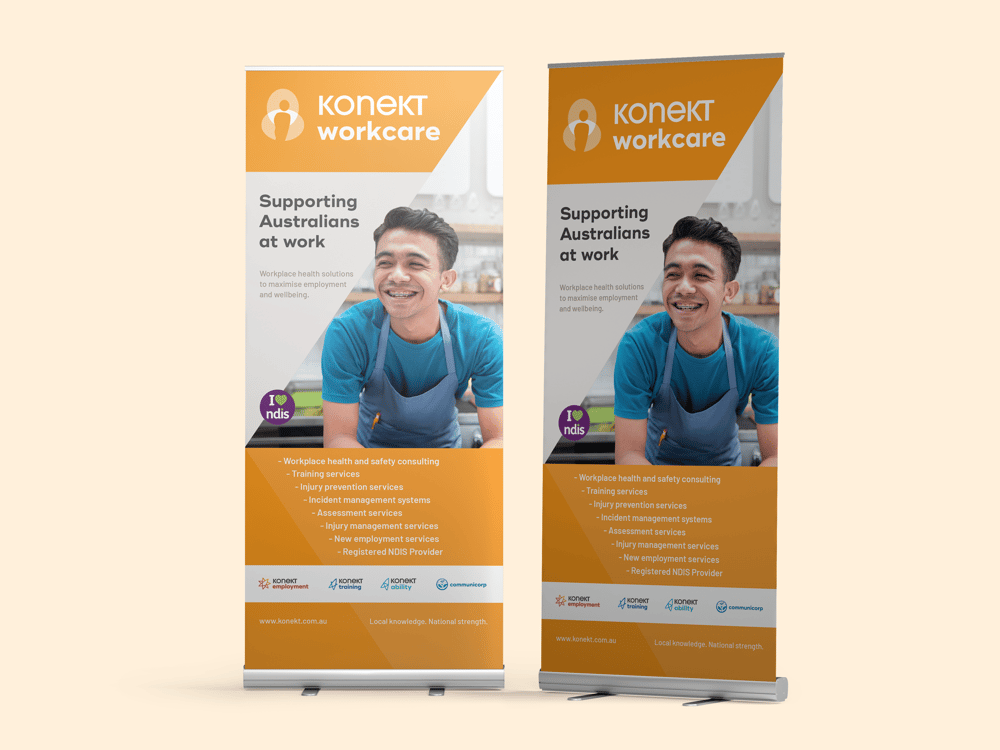
Konekt Workcare's line "Supporting Australians at work" says who they help and how, in four words.
Why brand messaging matters
Good messaging does more than sound nice. It gives your business:
- Recognition. People need to come across a brand several times before it sticks. Saying the same thing, the same way, everywhere is what makes it stick.
- Trust. Clear, consistent messaging shows a business knows who it is, and people buy from businesses they trust.
- More enquiries. When customers instantly understand what you do and why it's right for them, they're more likely to get in touch.
- A competitive edge. You can offer a similar product at a similar price to your competitors and still win on how you explain it.
- Faster, easier content. With your messages agreed, a web page, proposal or social post starts from a template rather than a blank page.
- A team on the same page. Everyone, from your sales team to a new hire, describes the business the same way.
The brand messaging framework
A brand messaging framework is one document that holds everything your business says about itself. Anyone writing for your brand pulls from the same source, so everything sounds consistent. These are its building blocks:
| Element | The question it answers |
|---|---|
| Purpose and mission | Why do you exist, beyond making money? |
| Target audience | Who are you talking to, and what do they need? |
| Positioning statement | Where do you fit in the market, and how are you different? |
| Value proposition | What specific benefit do customers get from you? |
| Brand promise | What can customers always count on from you? |
| Key messages | What are the three or four things everyone should know about you? |
| Proof points | What evidence backs up each message? |
| Tone of voice | How do you sound when you say it? |
| Tagline and elevator pitch | How do you sum it all up in one line, and in 30 seconds? |
A simple positioning statement template
Your positioning statement ties the framework together. Fill in the blanks:
For [target audience] who [need or problem], [your brand] is the [category] that [key benefit], because [reason to believe].
For example, for a fictional accounting firm: For Sydney tradies who hate paperwork, Ledger & Co is the accounting firm that handles everything by phone, because we've spent 15 years working only with trades businesses.
Key messages and proof points
Pick three or four key messages that support your positioning, and give each one proof. A message without proof is just a claim. Continuing the fictional example:
- Message: We fit around your working day. Proof: appointments by phone or video, before 7am or after 5pm.
- Message: We speak your language. Proof: every client works with one accountant who specialises in trades.
Tone of voice
Your tone of voice is your brand personality in words. Choose three or four traits and say what each means in practice, for example "warm, not gushing" or "confident, not arrogant". Your tone can flex by channel (more relaxed on social media, more formal in a proposal), but the personality underneath should stay the same.
For more on how these pieces differ, see Brand promise, USP, elevator pitch, brand story, brand personality: what's the difference?
How to create your brand messaging, step by step
- Get to know your audience. Talk to customers, read reviews and ask your sales team what people ask. Note the words customers use, not just the problems they have.
- Look at your competitors. Map what others in your market say. The aim is to find the gap: something true and valuable about you that nobody else is saying.
- Define your positioning and value proposition. Use the template above, and be specific: "great service" isn't a position.
- Choose your key messages. Pick three or four, each with proof.
- Set your tone of voice. Decide how you sound, with examples of what to say and what not to say.
- Write your tagline and elevator pitch. Distil everything into one memorable line and a 30-second explanation.
- Test it from three angles.
- Internal: does it reflect why you started and where you're heading?
- Customer: would your customers recognise themselves in it, and care?
- Competitive: could a competitor say exactly the same thing? If so, sharpen it.
- Roll it out everywhere. Update your website, proposals, email signatures, social profiles and signage, brief your team, and review your messaging at least once a year.
A final tip: when in doubt, choose clarity over cleverness. A clever line customers don't understand does less work than a plain one they do. We explain why in Communicating your key messages: why clarity beats clever.
Brand messaging examples
The best way to understand brand messaging is to see it in action.
Nike: "Just Do It"
Nike's message is that if you have a body, you're an athlete. "Just Do It" turns that into a call to action, and Nike has used it consistently since 1988, so it now stands for the whole brand.
Patagonia: "We're in business to save our home planet"
Patagonia's mission is its message, and the company backs it up with what it does, from repairing customers' clothing to campaigning on environmental issues. Values-led messaging only works when actions match the words.
Red Bull: "Red Bull gives you wings"
Red Bull sells energy and possibility, not just a drink. The message runs through everything it does, from extreme-sports sponsorships to its own media channels.

McDonald's: "I'm lovin' it"
Rather than promising you'll like the food, McDonald's goes straight to an emotion. The line has run since 2003 and works in markets around the world.
Australian brands doing it well
Closer to home, Moula's "Business Lending, Without the BS" tells small businesses exactly what to expect, and UGG Australia's "We exist to make self-expression comfortable for all" turns a product into a purpose. See more in Seven Australian brands nailing their brand messaging.
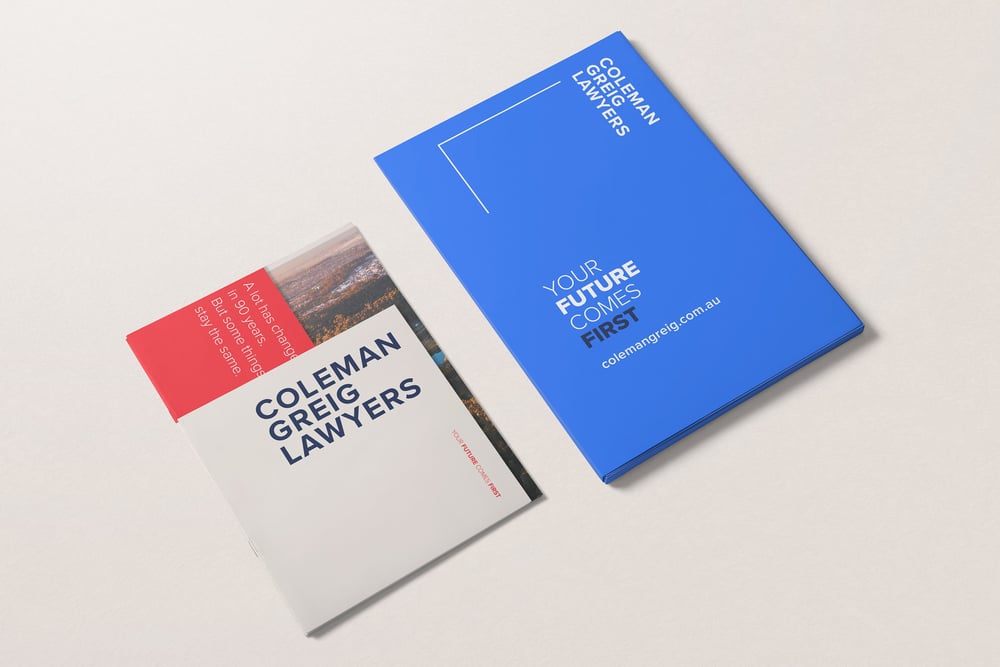
Coleman Greig Lawyers' line "Your future comes first" puts the client, not the firm, at the centre of the message.
Brand messaging FAQs
What is the difference between brand messaging and brand voice?
Brand messaging is what you say: your purpose, promise and key messages. Brand voice is how you say it: the personality and tone in your words. You need both, written down together in your messaging framework.
What is a brand messaging framework?
A brand messaging framework is a document that sets out everything your business says about itself, from your mission and positioning to your key messages and tone of voice. It keeps your messaging clear and consistent, whoever is writing.
What is an example of a brand message?
Nike's "Just Do It" is one of the best-known brand messages: in three words, it says anyone can be an athlete. For a smaller business, a brand message can be as simple as "fixed-fee legal advice, in plain English".
Why is brand messaging important?
It helps customers understand what you do and why to choose you, builds recognition and trust through consistency, and gives your team one way to describe the business. Combined with a clear brand strategy, it attracts the right customers.
How do you deliver a compelling brand message?
Use it everywhere a customer meets you: your website, proposals, social media, signage, packaging and how your team talks about the business. Repetition and consistency are what make a message stick.
How often should you update your brand messaging?
Review it once a year, and revisit it properly when something big changes, such as a new service, a new audience or a merger. Your core positioning should stay steady; proof points and examples can change more often.
Get help with your brand messaging
Brand messaging is simple to understand but hard to do well on your own, because it's difficult to see your business the way your customers do.
Creative Resort is a brand messaging agency in Sydney working with businesses across Australia. We'll help you find the right words, build your messaging framework and roll it out everywhere your customers meet you. Get in touch to talk about your brand.
About the author
Chelcie brings over 10 years in the design and technology fields. From developing award-winning mobile apps, managing digital and advertising agencies and developing global brands in Australia - Chelcie handles any challenge with enthusiasm. Her breadth of experience includes working with non-profit and government organisations, tech start-ups and marketing consultancy services. Chelcie is devoted to building effective creative strategies for clients, helping them to achieve real-world results in their respective fields.
More articles about Branding

How to Set a Great Brand Vision (According to Denise Lee Yohn)
30 October 2025
Read Article : How to Set a Great Brand Vision (According to Denise Lee Yohn)
Seven Australian Brands Nailing Their Brand Messaging
25 September 2024
Read Article : Seven Australian Brands Nailing Their Brand Messaging
Newsletter
Sign up for latest news & updates